
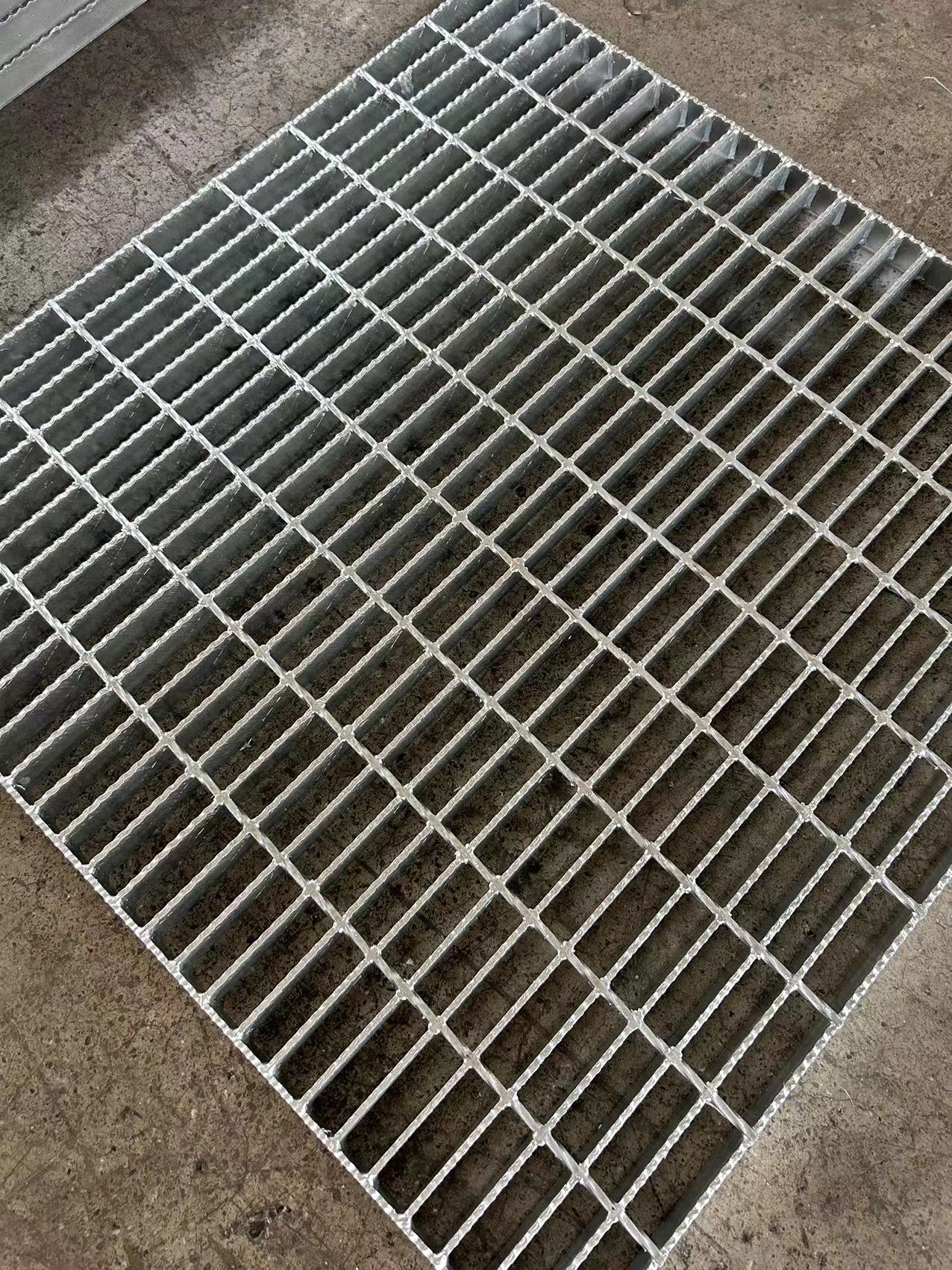
Serrated Steel Grating is a steel grating product designed for areas where walking safety, drainage performance, and stable load support are all important. Compared with standard flat steel grating, serrated steel grating has a toothed bearing bar surface that provides better grip and helps reduce slipping risks in wet, oily, dusty, or outdoor environments.
In industrial facilities, safety problems often come from small details. Water on a walkway, oil residue near equipment, rain on an outdoor platform, or dust accumulation in a working area can make ordinary flooring dangerous. In these environments, choosing the right grating surface is not only about supporting weight. It also helps protect workers and improve daily operation efficiency.
Serrated Steel Grating is widely used in factories, chemical plants, wastewater treatment facilities, power stations, offshore projects, drainage channels, industrial platforms, and other areas where anti-slip performance is required.
Why Anti-Slip Performance Matters in Industrial Flooring
Industrial flooring needs to handle much more than normal foot traffic. Workers may walk while carrying tools, pushing carts, or operating equipment nearby. In many industries, the working environment may also involve moisture, oil, chemicals, dust, or outdoor weather.
A smooth steel surface can become slippery under these conditions. Even if the flooring material is strong enough, it may still create safety concerns if workers cannot maintain stable footing.
The toothed surface design of Serrated Steel Grating helps solve this problem. Serrated bearing bars create additional contact points between footwear and the grating surface, improving friction and reducing slipping risks.
This makes serrated steel grating especially suitable for:
- Wet production areas
- Oil-contaminated floors
- Outdoor walkways
- Drainage channels
- Chemical plants
- Wastewater treatment facilities
- Loading platforms
- Equipment maintenance access areas
For projects that value worker safety, anti-slip performance should be considered together with load capacity and material selection.
What Is the Difference Between Serrated Steel Grating and Standard Steel Grating?
When selecting steel grating, many buyers first compare standard steel grating with serrated steel grating. Both products provide load support, drainage, and ventilation, but their surface structures make them suitable for different environments.
| Comparison Item | Standard Steel Grating | Serrated Steel Grating |
|---|---|---|
| Surface structure | Flat top surface on bearing bars | Toothed surface on bearing bars |
| Slip resistance | Suitable for dry and general access areas | Better for wet, oily, dusty, or outdoor areas |
| Common applications | General platforms, walkways, equipment access, ventilation areas | Chemical plants, wastewater plants, drainage channels, outdoor platforms, slippery areas |
| Walking safety | Stable in dry environments | Better grip in slippery conditions |
| Drainage ability | Open-grid drainage structure | Open-grid drainage structure with improved anti-slip effect |
| Cost consideration | Suitable for ordinary working conditions | More valuable when safety requirements are higher |
| Selection focus | Load support, ventilation, drainage | Anti-slip performance, load support, drainage, safe access |
So the choice is not simply about which one is better. It depends on where the grating will be installed. If the environment is dry and the access condition is simple, standard steel grating may be enough. If the site involves water, oil, rain, snow, dust, or industrial residue, serrated steel grating is usually a more suitable option.
How Serrated Steel Grating Improves Workplace Safety
The main difference between serrated steel grating and standard steel grating is the bearing bar surface. Standard steel grating usually has a flat top edge, while serrated steel grating uses a toothed structure to improve grip.
This design provides several practical benefits:
Better traction in wet environments
Water, rain, or cleaning liquid can reduce friction on ordinary surfaces. The serrated top edge helps workers maintain more stable contact with the floor.
Improved safety in oily areas
In factories involving machinery, processing, or maintenance, oil residue can make floors slippery. Compared with smooth steel surfaces, serrated steel grating provides additional grip.
More suitable for outdoor applications
Outdoor platforms, stairs, bridges, and walkways are affected by weather conditions. Rain and snow can increase slipping risks, so a serrated surface is a practical choice.
Useful for high-traffic access areas
Maintenance platforms and inspection walkways are used repeatedly. A safer walking surface can improve daily working conditions.
Serrated Steel Grating for Drainage and Industrial Platforms
Serrated Steel Grating is commonly used in drainage systems because it combines anti-slip performance with an open-grid structure.
For drainage channels, the open structure allows water, debris, and liquid to pass through, while the serrated surface improves walking safety around wet areas. This makes it suitable for factories, parking areas, wastewater treatment facilities, and outdoor drainage systems.
For industrial platforms, serrated steel grating provides a more stable working surface for employees moving around equipment. In power stations, chemical facilities, and manufacturing workshops, workers often need access to machines, pipes, and inspection points. A safe anti-slip platform can reduce risks during daily maintenance operations.
When serrated steel grating is used together with suitable support frames or angle steel embedded parts, it can form a more complete flooring and access system.
How to Choose the Right Serrated Steel Grating Structure
Not all serrated steel grating products are the same. The correct structure depends on the working environment, load requirements, and installation conditions.
Key factors include:
- Bearing bar height and thickness
- Cross bar spacing
- Panel size
- Support span
- Expected load
- Installation location
- Surface treatment
- Maintenance requirements
For pedestrian walkways, a standard serrated steel grating structure may be enough for strength and safety. For areas with carts, equipment, or vehicles, larger bearing bars and stronger support structures may be required.
The grating should also match the surrounding installation system. Even if the panel itself is strong, insufficient support may still cause shaking or noise during use.
Our Serrated Steel Grating Product Support
Our Serrated Steel Grating products are suitable for industrial, commercial, and infrastructure projects, especially areas where safety and durability are important. Products can be customized according to load requirements, panel dimensions, material selection, surface treatment, and installation conditions.
For wet environments, serrated steel grating can improve walking safety. For drainage projects, it can be matched with trench covers and support frames to form a stable drainage solution. For industrial platforms, suitable bearing bar specifications can be selected according to actual working loads. For outdoor applications, hot-dip galvanizing helps improve corrosion resistance.
Our related steel products also include Press-Welded Steel Grating, Plug-in Steel Grating, Heavy Duty Steel Grating, Steel Grating Platform, Trench Cover, Angle Steel Embedded Part, Steel Pallet, and customized steel structures. This helps customers match the grating panel with the complete project system.
Conclusion
Serrated Steel Grating provides a safer and more reliable flooring solution for wet, oily, outdoor, and high-risk working environments. Its anti-slip surface design helps improve walking safety while maintaining the strength, drainage ability, and durability expected from steel grating.
For industrial platforms, drainage systems, maintenance walkways, and access areas, selecting the correct grating structure, material, surface treatment, and support system is important. With proper design, Serrated Steel Grating can provide long-term performance and help create safer working environments.
FAQ
1. What is Serrated Steel Grating?
Serrated Steel Grating is a steel grating product with a toothed bearing bar surface, mainly used to improve slip resistance in wet, oily, or outdoor environments.
2. Where is Serrated Steel Grating commonly used?
It is commonly used in chemical plants, wastewater treatment facilities, industrial platforms, drainage channels, outdoor walkways, power stations, and equipment maintenance areas.
3. Is Serrated Steel Grating suitable for outdoor use?
Yes. Hot-dip galvanized Serrated Steel Grating is commonly used outdoors because it provides better corrosion resistance in humid and exposed environments.
4. What is the difference between standard steel grating and serrated steel grating?
The main difference is the surface design. Standard steel grating has a flatter bearing bar surface, while Serrated Steel Grating uses a toothed surface to provide better grip and anti-slip performance.
Post time: Jul-22-2026